
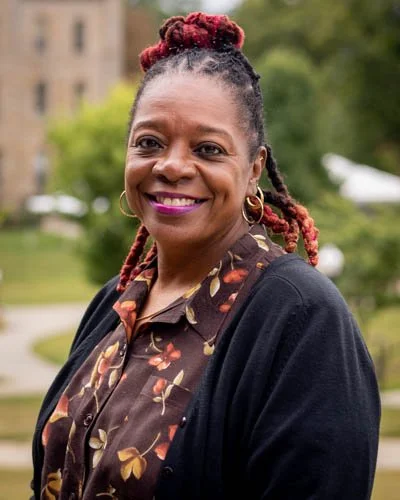
Mildred Johnson
Police Work as Calling: Bringing Christ Into Criminal Justice
Law enforcement professionals face some of society’s darkest realities, yet their calling demands both strength and compassion. In this powerful episode, Dr. Mildred Johnson recounts stories of personal trauma as a police woman, healing, and profound redemption from her decades in criminal justice. She shares her harrowing account of being set on fire and her journey to forgiveness for her attacker. Millie believes that her robust Christian vision for criminal justice has a real-life impact on victims, offenders, and communities alike, and wants believers to stand with the police by praying for them. Join us!
RESOURCES
+ Introduction to Criminal Justice From a Christian Perspective, by Mildred Johnson
+ Dr. Johnson’s staff bio at Geneva College
CONNECT
+Local to Columbus, OH? Register here for an upcoming class.
Kalos Center for Christian Education and Spiritual Formation | Our Columbus, OH Events
After Millie was set on fire by a young man during a chaotic night in Pittsburgh, she saw her attacker walk free in court.
“I saw people die. I saw people take their last breath. I walked through a journey with many rape victims. But I had to approach my work from the perspective of who Christ is in my life. How do I bring Jesus into all the terrible things that happen to people? Because sometimes, we, ourselves, are the only Bible that people have the opportunity to read.”
-
Mildred Johnson [00:00:00]:
And in one case, there was a mother of a son that was murdered, and they were drug dealers. A young man that did it was a drug dealer, but also her son. And this woman was able to face the young man outside of. I mean, he was convicted, he was serving time, but he had a son and he had a wife that was outside, you know, still living. The mother of the young man that was killed started to visit the young man that killed her son. When I witnessed this, I didn't even know if I would be able to do something like that if somebody took the life of my child.
Jim Spiegel [00:00:36]:
Welcome to the Kaloss Center Podcast. Welcome, everybody, to another episode of the Kalos Center Podcast. Our guest today is Dr. Mildred Johnson. She's a professor of criminal justice at Geneva College in Beaver Falls, Pennsylvania, where I worked. Before coming to Geneva, Millie served as a patrol officer and police sergeant for the city of Pittsburgh for 14 years. She was also a police chaplain with the Pittsburgh Bureau of Police Chaplaincy and director of the police academy at Westmoreland County Community College. She's also served as national trainer and instructor with Georgetown University's Active Bystandership for Law Enforcement Program.
Jim Spiegel [00:01:27]:
Also known as able, Millie has master's degrees in organizational leadership and criminal justice administration, and she's earned her Doctor of Strategic Leadership at Regent University. She's the author of Introduction to Criminal Justice From a Christian Perspective, published by Kendall Hunt just this past year. Millie's husband has also had a career in law enforcement. He's a retired police detective, and together they have three children. So, Millie, welcome to the Kaloss center podcast.
Mildred Johnson [00:02:04]:
Thank you, Jim. I am very excited to be here with you this afternoon.
Jim Spiegel [00:02:09]:
So being married to a detective has to have a psychological effect. I guess you really can't put anything past your husband, right?
Mildred Johnson [00:02:20]:
Well, he's actually still in law enforcement. Currently he serves with the 171st Air Refueling Wing as a master sergeant with the Air Force. Looking forward to retirement probably in July.
Jim Spiegel [00:02:35]:
All right, very good. A long, illustrious career. The two of you make quite the tandem as people in law enforcement. So what inspired you to go into this line of work?
Mildred Johnson [00:02:48]:
Okay, so that's a really good question. So I was in corporate America before becoming a law enforcement officer. And I happened to be sitting at my desk one day, not bored, but just kind of feeling like God had something else for me. And I turned to look out the window, and this was in downtown Pittsburgh. And I saw police vehicles speeding past with lights and siren. And it just looked like such an exciting, exciting job. And I was like, wow, I wonder what it would be like to be in that vehicle speeding up and down the city streets of Pittsburgh. But more so, what would it be like to help people and to make a difference? And after that particular day, probably a few weeks later, I happened to be sitting at that same desk, and I happened to be listening to what we then call what our students and things called today, our young people, the radio.
Mildred Johnson [00:03:45]:
Right. And there was an announcement that came on that basically said, the Pittsburgh police need you from out of, like, nowhere. So I took that as God's way of saying, let's get this moving, girl. And after that particular advertisement, I started on the journey to actually apply for the city of Pittsburgh Bureau of Police with no real belief that I would get the job, because about 5,000 people took the test the same day. But apparently God wanted me there. It wasn't a childhood dream. My childhood dream was basically to be a kindergarten teacher. So he kind of mixed it up completely for me.
Mildred Johnson [00:04:25]:
But that's sort of where my journey started. And once I got my foot in the door and I kind of got moving with the testing and going through the process, I became extremely excited, and I went full force into getting that. It was a vocation and a calling and a ministry for me. So that's sort of how it happened for me.
Jim Spiegel [00:04:46]:
So you never looked back, never had anything?
Mildred Johnson [00:04:48]:
No regrets? Not one.
Jim Spiegel [00:04:51]:
Those who work in law enforcement, I don't need to tell you, often see the darkest aspects of human nature. Right. So how does one avoid becoming cynical or jaded or just hardened by that?
Mildred Johnson [00:05:07]:
Well, to be honest with you, Jim, I experienced that. I experienced the hardening. I was on a very tragic and traumatic event that happened in a community where five kids died in a fire. And while there, I had no children of my own. At the time, I was fairly new as an officer, but I had a lieutenant who saw me basically becoming very emotional and in tears. And he came up to me and he goes, you know, a good police officer never cries, so you need to dry up those tears. And if you can't, maybe you're in the wrong profession. Of course, at that point, I started crying even more because he's yelling at me about it.
Mildred Johnson [00:05:54]:
But that did something to me. And for a few years, I actually stopped crying. I became very hardened, not against the people, but just when I went out to do my job, I had this totally different feeling about who I was because I was afraid to show any type of emotion because of what he actually said. That, in turn, led me to some Dark days, because it's very hard to not become jaded and cynical. And I saw that starting to happen. I was on the street as a patrol officer for about eight years. So about three of those years is when I went through this cycle of just being hardened, not allowing anything to affect me, showing no emotion, just going through the motions at work. God spoke to me.
Mildred Johnson [00:06:53]:
He basically removed me from that aspect of law enforcement. But I actually had to go through counseling and therapy to get through some of those very hard things. I saw a lot of things that I still think about even today, But I have a whole different outlook on some of those things today versus at that time. But it was very hard. What I will say is my relationship with Jesus Christ, Christ really made a difference because once he removed me from. I won't say the negative side of law enforcement, but I will say the side that, you know, it's more. It affects you more than anything because you're seeing the homicides, you're dealing with, the rapes and the robberies and the burglaries and the kids being molested, and you're arresting the pedophiles, and you're dealing with people who have committed serious crimes. And it's so hard sometimes to get those feelings of having a heart back.
Mildred Johnson [00:07:51]:
But God gave me those things back. But it came with some sacrifice. It didn't come easily for me, but he restored the tears and he restored the feelings by removing me from that aspect of law enforcement and placing me in a different area. But it didn't come without me being hurt and without me being broken. And so those were some of the things that happened that helped me to get back to where I needed to be as an individual and a woman of God.
Jim Spiegel [00:08:24]:
Wow. What a journey. Did your husband have a similar experience, or was his kind of psychological path different than yours in that way?
Mildred Johnson [00:08:35]:
Yeah, his was totally different. He came in with military background, so he was already a Marine. And then he got out to go in and pursue his career. He did 25 years, so his career was a little bit longer than mine. But he came in with a different mindset. I came in very naive, not ever being exposed. I was very protected. My dad was a pastor, My mom was very strict, So I was very protected as a child.
Mildred Johnson [00:09:07]:
And my parents did not want me to go into law enforcement. And so I came to the field totally different. And so it was kind of like a culture shock for me, some of the things that I had seen. But for him, he had already been in Afghanistan. He'd Already experienced a war. He'd already gone through some things, and then he brought a lot of his experiences into the field, and so it was probably a lot easier. I'm thankful that I had him there with me to walk through the journey, but his path was totally different.
Jim Spiegel [00:09:42]:
Well, throughout your career, presumably, you've also seen some inspiring cases of redemption. Can you share a story or two to illustrate that?
Mildred Johnson [00:09:54]:
Yeah, I can share my own story of redemption because something very traumatic happened to me. I was actually set on fire as a police officer, a young man, after a huge sporting event happened in the city of Pittsburgh. I was called, myself and my partner. We were called to a call to disperse a large crowd, and it was about three to 4,000 people, and they were in the streets in the Bloomfield area of the city. Now, we didn't go into the call. We wanted people to celebrate. It's perfectly fine to celebrate, but you can't jump on vehicles, and you can't stand vehicles and traffic. And so when we arrived on the specific car, everybody from the crowd started jumping on top of our police vehicle, trying to turn over our patrol vehicle.
Mildred Johnson [00:10:46]:
So I jumped out, and when I jumped out of the vehicle, a young man had, like, a lighted tiki torch, and he tossed the tiki torch onto me. At that time, I don't remember a whole lot about it. I believe I kind of went into shock, but. But I took off running. I didn't do the stop, drop, and roll. I took off running. Of course, I'm sure that looked quite funny, seeing a police officer on fire running down Liberty Avenue. But that's exactly what happened.
Mildred Johnson [00:11:16]:
And a lot of the officers my partner got on, he called for backup. So pretty much the whole precinct showed up. It turned into a really crazy time. At that time, I just remember them loading me into the ems, the medic vehicle, and basically trying to wrap up. And the good thing is, Jim, God is still so good, even in the midst of these things, is I had just taken off the jacket that they gave to us, which was a plastic jacket. If I had not taken that off, it probably would have stuck to my skin, and it would have been a lot worse to get to the redemption side of things. When it went to court. Court, the young man who set me on fire got no charges.
Mildred Johnson [00:12:02]:
He was not convicted, and he was released. So there were no charges against this young man for what he did to me. When I heard the verdict, I screamed out in court, and the judge tried to hold me in contempt of court and told me that if I said Anything else. Now I'm screaming, I'm crying, because I'm a public servant. I'm out there doing my job, thinking that the situation system would take good care of me, but that's not how it happened. So I'm going to move fast forward because that caused me to be. And when I talked earlier about the sacrifice and the brokenness, this is where it all happened, because I was still in law enforcement, But I became even more cynical and hardened after that situation. So now, yep, I am serving my community.
Mildred Johnson [00:12:49]:
I'm still doing my job. I never stopped doing that because I know the Word tells us that whatever we do, we do it as unto the glory of God. But I was not a happy camper, and there was a lot of darkness in my heart against this young man who had done that. So, years later, I was a chaplain. I had already became a chaplain, but I was doing some chaplaincy in the Allegheny County Jail with the chaplain's office. And I did it to help out a. A chaplain friend who asked me to do it. I said, I'll do it for six months, and after that, I won't do it.
Mildred Johnson [00:13:24]:
We were doing a program where we helped people that were coming out of the system. So it was a restorative justice type of concept where we helped people to reintegrate back into their communities. And guess who happened to be in jail when I got there? The young man that set me on fire, not because of what he did for me, he. He got arrested for selling heroin. And so I had an opportunity. Now, when I first encountered him, I was not happy. He remembered me, and I certainly remembered him. And he made some moves to try to talk to me, and I said no.
Mildred Johnson [00:14:05]:
And I'm just going to be honest with you. I told him, you know what? I had wished you were dead. I said, for what you did to me, I had some really hard feelings. I have nothing to say to you, and I would prefer if you don't even look at me while I'm here. Now, mind you, I'm there representing Christ, so I'm sure Jesus was not very happy with my heart at the time. Eventually, we did have a conversation, and I did eventually sit and talk with him. He apologized to me, and he explained to me that it wasn't anything against me. He had just been drinking, and he was just extremely drunk, and he really didn't even remember a lot of what he did to me.
Mildred Johnson [00:14:48]:
The redemption of that is my heart was changed that day. I forgave him. We held each other. We hugged each other. And, Jim, for me, that was healing. It may have been healing for him, but I'm telling you, the load that was lifted off of my heart and my shoulders, and I felt renewed in Christ because up until that point, I knew that I was holding such a harsh feeling against this young man. And I wanted to be redeemed. I wanted to reconcile, and I wanted to forgive.
Mildred Johnson [00:15:26]:
But it was just so hard because I felt like the system had failed me, and it was political. There was a reason behind all of that, and I found that out later. But the redemption and the reconciliation and the restoration that happened. And I had wondered why God had placed me in the correctional facility when I was a police officer, you know, and I'm helping to put people there, right? I'm arresting people. And I'm like, lord, why are you sending me in this facility? You know, I don't belong there. But now I realize what God was doing when he put me there in that corporation facility. It was for healing and redemption and restoration and reconciliation and transformation for both he and for I. So, yeah, wow.
Jim Spiegel [00:16:12]:
That's powerful. I do think that forgiving others who've sinned against us is our biggest challenge as Christians. And it's not something that's humanly possible. Would you agree with that? At least in some cases, it takes a. An act of the Spirit. Sounds like that was true of you.
Mildred Johnson [00:16:31]:
Yes, Jim, that was nobody but God. There was no way I could have done that, and I didn't do it instantly. I was there for a little while, and I ended up being there almost three years. So the six months turned. It went a whole lot longer than six months, and there were a lot of lives that I had a chance to touch. But there were so many lives that changed mine by being there, because I really got an opportunity to see. See what happens to people when we. We arrest them and they're incarcerated.
Mildred Johnson [00:17:00]:
So I got to see people live out their lives while incarcerated and how they can be changed and how God can. Can heal and redeem and forgive even those who break the law. And I saw it happening right in front of my face, the transformation and the restoration that took place and those offenders. So it was good for me in a lot of ways.
Jim Spiegel [00:17:24]:
That's great. And I'm sure you're very familiar with the. With prison ministries of various kinds, and you've seen redemption in that context. Yes, that's wonderful. But it is something of a paradox, isn't it? You know, when you think of victims of, you know, especially violent crimes, maybe murders Families that are pursuing the prosecution, the just prosecution of the. Of the perpetrators. But then, as Christians, we're also called to forgive. How does that work in your mind? Because it does seem to be a tension there.
Jim Spiegel [00:18:03]:
Can someone genuinely forgive while also seeking legal prosecution? If so, how do those two things work together?
Mildred Johnson [00:18:15]:
So that's one of the big things that I enjoy about the criminal justice system. We don't talk about it a lot, and it's not accepted in a lot of places. But restorative justice, exactly what you said, is the component behind it. It's bringing the offender and the victim together. Because when crimes happen, crimes don't just affect the offender and the victim. And you know that. It affects the entire community. Families are harmed, communities are harmed.
Mildred Johnson [00:18:46]:
There's so many things that happen when people are harmed, when somebody's offended. So the restorative justice process gives the victim and the offender the opportunity to face. I mean, our constitution says that you have a right to do that. But the restorative justice, it brings in the forgiveness piece, it's not for. So you can't force someone to do it. But if the victim wants to face the offender and the offender is ready to actually acknowledge what they did wrong and face the person that they victimized, that's the piece that restorative justice does. It brings the two together so that healing can actually take place. Because when crimes happen a lot of time, yes, somebody's arrested, somebody serves time, but that victim is still out there, right? And somebody's still hurt.
Mildred Johnson [00:19:40]:
Even though the system works it out, you know, it goes to court, there's a verdict, somebody's found guilty and somebody's incarcerated, but there's still a victim out there that's still suffering. And so with restorative justice, it gives both parties, families, the community, everybody that's a participant, everybody has an opportunity to get involved in that criminal activity as well as the healing. And so I've seen it even in homicide cases, even where the victim is deceased, I've seen family members of the victim actually face the offender. And in one case, there was a mother of a son that was murdered, and they were drug dealers. The young man that did it was a drug dealer, but also her son. And this woman was able to face the young man outside of. I mean, he was convicted, he was serving time, but he had a son, and he had a wife that was outside, you know, still living. The mother of the young man that was killed started to visit the young man that killed her son, who murdered her son while he was incarcerated.
Mildred Johnson [00:20:50]:
She basically took him on as being her own after losing her son to this gentleman. And then she took on his wife, wife and his child and started to treat them as if they were her own family. That took a lot. That was not something that was easy to do. I don't even know when I. When I witnessed this, I didn't even know if I would be able to do something like that if somebody took the life of my child. But this woman who loved the Lord, and she said to this young man, because of who I am in Jesus Christ and because I love God, I have to forgive you. You hurt me.
Mildred Johnson [00:21:27]:
You took my son, My only son. That was her only son. But she said, I'm going to forgive you because I know who God is and I know that's exactly what he would want me to do. And she did it. And she got on the bus. She didn't even drive. She would catch the bus to get to this young man to visit him while he was incarcerated.
Jim Spiegel [00:21:50]:
That is extraordinary. What a profound testimony to the power of the gospel. Right?
Mildred Johnson [00:21:56]:
Yeah.
Jim Spiegel [00:21:56]:
So, as you know, attitudes towards law enforcement in the United States are deeply polarized. In your view, is there anything that can be done or what can be done to restore proper confidence or trust in police and other people that are working in law enforcement?
Mildred Johnson [00:22:16]:
So one of the programs you mentioned earlier, the able, the Active bystandership and Law enforcement, that program was instituted actually pretty much after the George Floyd incident had happened, where we saw the community come against the police. Right. So what ABLE does is it involves the community in the training of police officers. It helps to regain that trust. We went to the community, we asked the community, what is it that you want to see in your law enforcement officers? We have to come away from. It's the us versus them. And now we have to look at the us and them. So that community policing side of law enforcement, where we work alongside the community, not against the community, they need to see us doing the work that we do.
Mildred Johnson [00:23:09]:
So many times in the media, we always see the negative side of law enforcement, but there are so many positive things that law enforcement officers do, but those stories don't get told. And so we need to make sure that those stories are being told. And that's what ABLE is all about. It's going to the community. We ask them to write letters and give their feedback on what they believe their police department should look like. We have to be better communicators. We cannot just do it all alone. We can't have that silent or that thin blue line that everybody thinks about.
Mildred Johnson [00:23:46]:
So we have to do better. So people believe in law enforcement. We need better officers, officers that are educated, officers that are not just looking for a paycheck, but they're passionate about what they're doing and they want to make a difference. And so we need officers to not just talk about the change, but, but we need them to be the change. And that's kind of what I try to do with my students who are interested in law enforcement. I am definitely constantly telling them, you have to take Jesus into that negativity, into that dark world. You can't do it without him. But we need Jesus.
Mildred Johnson [00:24:26]:
We need police officers who love the Lord and who are willing to serve him. And as they serve their communities and they serve man and humankind, if they can't take Jesus into it, and if they don't have the right mindset and they're not passionate about what they're doing, then it's probably not the field for them. Because people want to know that you care, right? They don't care how much you know, they want to know how much you care. And we need police officers that care. It's not just about a six figure paycheck, but because you know what? You are a moving target every single time. It's not about the money, it's about what you do for the Lord and how you want to serve the people who definitely trusted you and said yes to you when you took that oath to say that you would protect and serve.
Jim Spiegel [00:25:15]:
So one of the reasons that many Americans take a negative view of law enforcement is because of apparent racial profiling, racial disparities when it comes to incarceration rates. How has your experience in law enforcement affected your take on those issues?
Mildred Johnson [00:25:35]:
Well, Jim, I wouldn't be, I couldn't lie to you. I wouldn't even be honest if I tell you that pretty much probably all officers profile. Now, I'm not saying it's right, but we do it. We see specific things, things that stand out that in your heart and mind, because you've addressed it and dealt with it so many times, immediately you look at, okay, selling drugs, gang member, criminal element. There are specific things that you know, because you do the job and you've dealt with in the past, you're going to point it out. That's a side of what you do. It doesn't make it right. But I had to learn that, you know, even though we all do it, I had to learn that everybody's an individual and I have no Right.
Mildred Johnson [00:26:23]:
To prejudge anybody or bring any biases into this field. Right. Because when I took the oath to protect and serve, it didn't matter. The skin color, the gender, the religion, the ethnicity, none of those things matter. I'm a police officer. My badge said Pittsburgh Police. That meant everybody within the city of Pittsburgh. Right.
Mildred Johnson [00:26:47]:
And so I had to stop and think about, you know, what. What if I was that individual? What, I want somebody to pull me over because I'm driving a specific vehicle or I'm dressed a specific way. I want to treat people the way that I want my family members to be treated and the way that I wanted to be treated. So I had to remove those things and I had to talk to people and address people based on who they were. Now, was I correct in some of the criminal activity? Absolutely. Some of the ones that I addressed, they were the criminal element. But I needed to find that out the right way. And I found out that it made things a lot easier for me when I looked at people for who God created them to be.
Mildred Johnson [00:27:31]:
And they deserve to be treated with dignity, integrity, and respect just the exact same way that I wanted to be treated as well.
Jim Spiegel [00:27:39]:
Yeah. My next question was going to be, what is it that distinguishes a Christian perspective on criminal justice? Your book is. It's called An Introduction to Criminal justice from a Christian Perspective, which, by the way, seems to be unique. I can't locate. I've been unable to locate any other book out there that's like that. That is sorely needed, obviously. So it fills a major hole there. Yeah.
Jim Spiegel [00:28:07]:
So what is a Christian perspective on criminal justice? You've talked about. You were just talking about the Golden Rule, which. It's the core of a Christian ethic, when you think about it. You know, I mean, Jesus, you know, when he's asked to sum it all up, you know, love your God with all your heart, mind and soul, and love your neighbors yourself. And the way he puts it is, you know, you treat others as you would want to be treated, and that's as essential to police work, I would think, is any other line of work, maybe even more so. It's great that you mentioned that. You highlight that. You've talked about forgiveness and restoration.
Jim Spiegel [00:28:49]:
Justice, obviously, is a fundamental biblical value and principle. What are some other features of a distinctively Christian approach to criminal justice?
Mildred Johnson [00:29:06]:
So for me, Jim, when I think about it, it was, Jesus was the greatest servant. And when you take that oath, your oath, when you raise your right hand, you are saying, I take the oath to protect and serve and who was Jesus? He was the greatest servant of all. He said, I didn't come to be serv. Served. I came to serve. And so when I look at criminal justice from a Christian perspective, I look at the model of who Jesus Christ was. Did he get angry? Oh, yeah, there were times that he got angry. But did he forgive people even to the magnitude of when they hung him on the cross, right when they crucified him? I am nowhere near who Jesus is, but I strive to be more like.
Mildred Johnson [00:29:49]:
Like him. And as they did those things to him, he didn't seek retaliation. He didn't seek revenge. He continued to hang on that cross and die for the sins of man. For you, for me, for all of us. And so when I think about what Christ did for me, right? And all that he went through for me, for me, a little old wretch like me, right? I was that important to him that he gave his life, life for me. So why can't I get out there and serve the people and not be retaliatory, but serve as Christ served, right? No retaliation. I told you I had hard feelings, but I had to let those things go.
Mildred Johnson [00:30:29]:
If I wanted to model who Christ is in our criminal justice system, then that meant for me that I had to have a forgiving heart. Did I see some things that were really, really hard and I struggled with? Absolutely. I saw people die. I saw people take their last breath. I saw children be molested. I saw all types of homicides happening. I walked through a journey with many rape victims. But I definitely had to look at it from who Christ is, you know, who was he in my life? Who is he in my life? And how do I bring him into all the terrible things that, you know, that happen to people? Because sometimes we are the only Bible that people have the opportunity to read.
Mildred Johnson [00:31:16]:
And I don't want to be that one when I face Jesus. And he says to me, well, you had an opportunity to model me and to show people who I am, and you didn't do what you were supposed to do. So for me, looking at criminal justice from a Christian perspective, it's bringing Jesus into every part of it. The Ten Commandments, even with the United States Constitution, there are great things in there, right? We needed those laws. But the greatest law was the Ten Commandments that God gave to us, right? And we say the Lord's Prayer, right? I know we recited, but now, Jim, I recite the Lord's Prayer every single morning in my own prayer time. And I really had to learn how to focus in on what does the Lord's Prayer really mean? Because there were so many years that I said it. Right. Because that's what we do.
Mildred Johnson [00:32:10]:
But what does it really mean to forgive those who come against us? Right. As he forgives us. How do we do that? Right. So it really has meaning for me now. It's not just words that's on a sheet or in the Bible or on a piece of paper. It has a lot of meaning. Let your will be done here on earth as it is in heaven. It changed my perspective in a lot of ways.
Mildred Johnson [00:32:39]:
And I believe as I grow and I mature even more in Christ and I become closer to Him, I truly understand what it means to have Christ in our criminal justice system. And it's really helping me to become a better professor and faculty member for the students that God gives to me, to instill who he is in them. And that's what I do in the classroom. We don't. We talk about the criminal justice system, but Jesus is all over it. I can't teach it without Him.
Jim Spiegel [00:33:10]:
Wow. Yeah. He even actively forgave those who were crucifying him.
Mildred Johnson [00:33:15]:
Yeah, absolutely.
Jim Spiegel [00:33:17]:
There was no repentance on their part. They were. We're still doing it. And when we pray the Lord's Prayer, we are asking God to literally apply the same standard to us that we've applied. This is why we should not pray the Lord's Prayer in a glib, casual fashion just because you were doing exactly that. So we need to be vigilant in our forgiving. And even if it takes time. You mentioned that in the case of the person that burned you, that took time.
Jim Spiegel [00:33:50]:
It could take months or longer. But I think that if you're actively pursuing that, even though those feelings of resentment and grudge can well up again, just to repent whenever that happens, because it can be a process. But if we're really resolved to pursue that, I think then God, you know, his spirit, you know, he has mercy on us and enables us to do that. There's a story that Corrie Ten Boom tells in one of her books. She was a victim of the Holocaust and lost her sister after the war. She was at a church service, and there was a Nazi officer there who worked in the death camp where her sister was killed. And. And he came up to her afterwards and said, I worked in that camp, but I've become a Christian and God has forgiven me.
Jim Spiegel [00:34:44]:
He extended his hand to shake her hand, and she said, I could not bring myself to do it. All I could do was say, lord, I'll stick my hand out there. You're going to have to do the rest. And she did. And she said as soon as they clasped hands, she just had this, this feeling of intense love for the man and, and, and compassion. And it was a genuine forgiveness that she experienced. She said, I, I forgive you with all my heart. And it was real.
Jim Spiegel [00:35:16]:
So I think it's one of those things. And this is true in a lot of aspects of the Christian life, right? If we, even if we can just give a mustard seed worth.
Mildred Johnson [00:35:24]:
Amen.
Jim Spiegel [00:35:25]:
Of effort to obey, you know, his spirit, you know his spirit lives in us, right? And he can be strong where we are weak. So most of our listeners don't work in law enforcement. I'm sure some do and can really resonate with what you've been saying. But we're all deeply impacted by it. Whether or not we find ourselves victims of some criminality, a lot of us have been. Or you get pulled over for a speeding ticket, or you get a citation, or maybe a good friend gets victimized or is an offender. Whether or not any of those things happen, we're all protected by police and other people in law enforcement. And it's critical for an ordered society.
Jim Spiegel [00:36:14]:
What can the ordinary person, layperson do to support law enforcement systems and personnel?
Mildred Johnson [00:36:23]:
Trust in us, because we need that. We need the community. We need Christians, especially Christians, to trust us and call us on the things that we do wrong. And most of all, most of all, pray. Pray for your men and women in law enforcement. We need prayer. Not every person that is hired to be a law enforcement officer should actually have that badge of honor. And we just, we know that not everybody that's hired should be hired.
Mildred Johnson [00:36:59]:
If you see something happen, be open to talking with us and call us on the carpet, but do it in a rightful way. So many times we see protests, right? People protest and everybody has the right to protest. And no police officer can stop that. There's nothing against it. But don't come against us with violence. Come against us with prayer. Go to your Congress people. Go to the people that create the laws.
Mildred Johnson [00:37:26]:
We're the executors of those laws. So speak to the people that have the power to change and make the changes that law enforcement officers need. We need your respect. We want to respect, we should respect as well. But we need the community to respect us. The very first professional law enforcement entity came in London with Sir Robert Peel. He didn't name us police officers, he named us peace officers because that's exactly what he wanted. Police Officers to be.
Mildred Johnson [00:37:59]:
So we need peace, we need prayer, we need perspective, and we need peace.
Jim Spiegel [00:38:05]:
Good. Yep. Prayer is something we can all do. Praying for all those things you mentioned, as well as wisdom the Apostle Paul and Peter both remind us of, and that is that all the governing authorities have been placed in their positions by God. For that reason, we need to pray for our rulers and others in authority, all three branches of government. Right. This is. We're talking about executive branch, but also legislators who make the laws that then you in law enforcement are called to enforce, whether or not you believe in those laws.
Jim Spiegel [00:38:38]:
Right. I'm sure there are certain elements of American law you disagree with. We all do on certain points. But you're in a position where, like it or not, I've got to enforce this. It's the law. But we do need to be praying for leaders in all three branches of government. What is your view of the meaning of life and how has your professional work aimed to pursue this or fulfill that sense of meaning and purpose?
Mildred Johnson [00:39:06]:
So if you would have asked me this probably 20 years ago, I would have had a totally different answer. I would have probably thought a successful career, being able to make money and have the. The picket fence, the big house, all the things that we work hard for. The American dream. Right. But now where I am in life, it's just about living for Jesus Christ and growing closer to him in my faith, in my prayer life, having a relationship with him. Not just talking the talk, but walking it out. Leaving a legacy in those students that they will go out there and they will know that they heard about Jesus Christ.
Mildred Johnson [00:39:51]:
Not only did they hear it, but they saw the light and being able to take the light. If I can leave that legacy when I'm not here anymore. And students will say, I remember when Dr. Johnson said this about Christ or whenever she told us this. So for me, right now, life is about living for Christ. Am I going to mess up? Absolutely. And I would never, ever say that I don't. But I know that he's a forgiving God.
Mildred Johnson [00:40:19]:
And I know that First John 1:9 belongs to me, and if I confess it, he will forgive it and cleanse me of all unrighteousness. So right now it's about modeling Jesus Christ in everything I do. Wow.
Jim Spiegel [00:40:33]:
That's great. Well, you're doing it, Millie, so thank you. It's inspiring. Keep up the good work. And thank you for joining us today.
Mildred Johnson [00:40:42]:
Thank you for having me. I really appreciate it. It's been a great afternoon.
Jim Spiegel [00:40:47]:
Thank you for listening to the Kaloss center podcast to get notified when we publish a new episode. Please subscribe and let us know what you think by leaving us a review.
Professor of Criminal Justice at Geneva College
Dr. Mildred Johnson is a professor of criminal justice at Geneva College in Beaver Falls, Pennsylvania. Before coming to Geneva, Millie served as a patrol officer and police sergeant for the city of Pittsburgh for 14 years. She was a police chaplain with the Pittsburgh Bureau of Police Chaplaincy and Director of the Police Academy at Westmoreland County Community College. She's also served as a national trainer and instructor with Georgetown University's Active Bystandership for Law Enforcement Program. Millie has a master’s degree in organizational leadership and criminal justice administration, and she earned her Doctor of Strategic Leadership at Regent University. She's the author of Introduction to Criminal Justice From a Christian Perspective, published by Kendall Hunt just this past year. Millie's husband has also had a career in law enforcement. He's a retired police detective, and together they have three children.